Disclamer: Seven Rivers Capital owns Freedom Holding shares (#FRHC)
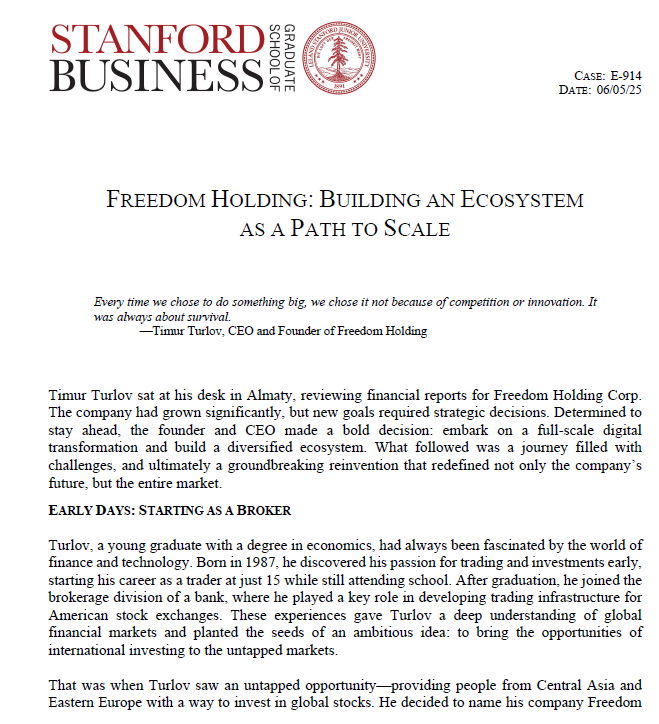
A new case study titled «Freedom Holding: Building an Ecosystem as a Path to Scale» has been released at the Stanford Graduate School of Business. Designed for MBA students, the case study reviews Freedom’s strategy, business model, management decisions, listing on NASDAQ, internal transformation, IT product launches and the development of its corporate ecosystem.
According to Timur Turlov, CEO and majority shareholder of Freedom Holding Corp., the FRHC business case at Stanford is vivid confirmation that ideas born outside global financial capitals can also be relevant on the international stage. It is entirely possible to build a successful and unique fintech group not only in London or New York, but also in Almaty and Astana. The key is consistency and a systematic approach — avoiding imitation and firmly adhering to one’s own path.
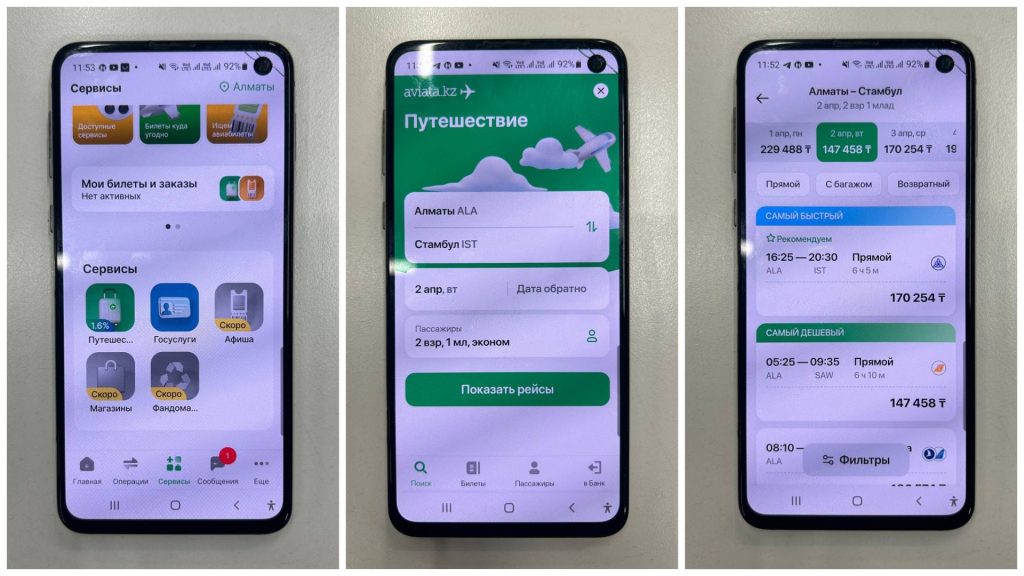
In 2025, Timur Turlov, founder and CEO of Freedom Holding Corp., faces a pivotal strategic decision about the future direction of his fast-growing financial technology company. What began as a Kazakhstan-based brokerage offering access to U.S. stock markets has evolved into a full-fledged financial ecosystem—including banking, insurance, payments, telecom, and lifestyle services—unified under a single digital platform known as the Freedom SuperApp. With deep market penetration in Kazakhstan and growing presence across Central Asia and Eastern Europe, Freedom has established itself as a formidable challenger to local giants Kaspi and Halyk.
However, as competition intensifies and digital financial services rapidly consolidate, Turlov must determine the company’s next move. He is weighing three strategic paths: doubling down on Kazakhstan to surpass local competitors; expanding horizontally within existing international markets; or entering entirely new geographies such as Southeast Asia or the Middle East. Each option carries distinct risks and resource requirements, with implications for Freedom’s technology infrastructure, go-to-market strategy, customer acquisition model, and organizational capacity.
This case explores the challenges of scaling platform ecosystems in emerging markets, the trade-offs between depth and breadth in growth strategy, and the leadership dilemmas associated with making high-stakes, future-defining decisions in rapidly evolving industries. It provides an opportunity to examine how companies can build defensible advantages through integration, user behavior design, and strategic sequencing—particularly when operating in underdeveloped financial and regulatory environments.