
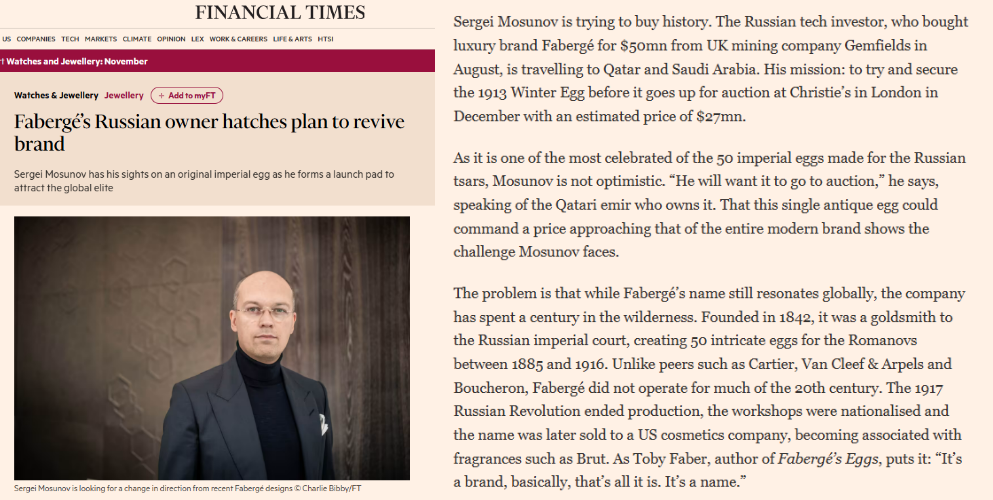
Fabergé’s Russian owner hatches plan to revive brand
Source: Financial Times – Companies
Fabergé Seeks Renaissance: Russian Owner’s Bold Plan to Revive Iconic Luxury Brand
Introduction:
Fabergé, the legendary Russian luxury brand once synonymous with opulent imperial eggs, has languished in obscurity for over a century. Now, its new Russian owner, Sergei Mosunov, is hatching an ambitious plan to revive the brand’s prestige and reclaim its former glory. With a reported budget of $50-100 million over the next five years, Mosunov aims to restore Fabergé’s status as a premier purveyor of high-end jewelry and objets d’art, targeting a new generation of discerning collectors and connoisseurs.
Key Takeaways:
– Fabergé’s new Russian owner, Sergei Mosunov, is investing heavily to revive the iconic luxury brand after decades of decline.
– Mosunov’s strategy involves targeting today’s “royalty” – tech tycoons, Gulf state royals, and even British royals – with bespoke, high-end creations.
– The brand will focus on two collections: a Heritage line of super-luxury bespoke pieces, and a contemporary “Code” collection with a futuristic vision.
– Mosunov faces the challenge of recapturing Fabergé’s legendary craftsmanship and artistry, which money alone cannot buy.
– The revival of Fabergé is intertwined with Russia’s efforts to reclaim its cultural heritage, raising questions about the brand’s political undertones.
Reviving a Storied Legacy
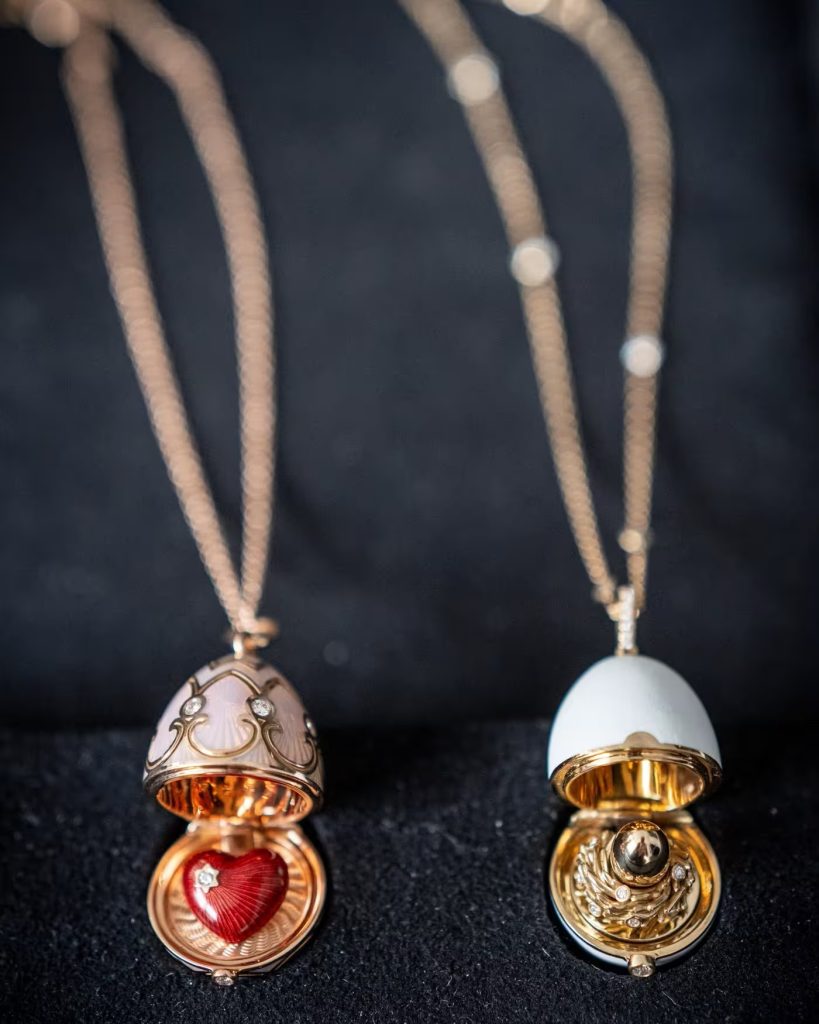
Fabergé’s history is as rich and storied as the opulent imperial eggs that once captivated the Romanov dynasty. Founded in 1842 as a goldsmith to the Russian court, the company rose to global fame under the leadership of Carl Fabergé, who created 50 intricate eggs for the tsars between 1885 and 1916. However, the 1917 Russian Revolution abruptly ended Fabergé’s production, and the brand languished in obscurity for much of the 20th century, eventually becoming associated with fragrances and cosmetics.
Now, Sergei Mosunov, a Russian tech investor, has acquired Fabergé for $50 million, determined to restore the brand’s former glory. Mosunov’s ambitious plan involves spending between $50 and $100 million over the next five years to rebuild Fabergé’s prestige and recapture its position as a premier luxury brand.
Targeting Today’s “Royalty”
At the heart of Mosunov’s strategy is the targeting of a new generation of discerning collectors and connoisseurs – what he calls the “royalty” of the modern era. This includes tech tycoons like Elon Musk, with whom Mosunov hopes to collaborate on a space-themed Fabergé egg, as well as Gulf state royals and even British royals, such as Kate Middleton.
Mosunov’s approach harks back to Fabergé’s original playbook, when the brand insinuated itself into the Russian imperial court. By cultivating relationships with today’s influential figures, Mosunov aims to imbue Fabergé with a sense of exclusivity and prestige that can help drive demand for the brand’s high-end creations.
Balancing Heritage and Innovation
Mosunov’s revival plan hinges on a delicate balance between honoring Fabergé’s storied heritage and embracing a more contemporary, forward-looking vision. The brand will focus on two distinct collections: a Heritage line of super-luxury bespoke pieces, where it will compete with the likes of Cartier, Graff, and Boucheron, and a “Code” collection that explores more experimental, futuristic designs.
This dual-track approach is designed to appeal to both traditional Fabergé enthusiasts and a new generation of luxury consumers who crave innovation and a sense of modernity. Mosunov is adamant that the brand will only use natural diamonds, eschewing lab-grown alternatives, in a nod to Fabergé’s commitment to quality and craftsmanship.
The Challenge of Recapturing Artistry
As Mosunov seeks to revive Fabergé, he faces a formidable challenge: recapturing the brand’s legendary artistry and craftsmanship, which made it a favorite of the Romanov dynasty. As Toby Faber, author of “Fabergé’s Eggs,” notes, the original Fabergé